Adjusting to life after amputation involves physical, emotional and lifestyle changes. With the right rehabilitation team and support system, patients can learn new ways to navigate daily life.
Ron Holbrook, amputation program manager at Encompass Health Rehabilitation Hospital of Concord in New Hampshire, is dedicated to ensuring patients get the care they need after amputation. He said there are many factors that affect an individual’s inpatient rehabilitation therapy, recovery time, life expectancy and home life.
Factors that affect recovery after amputation
Severity of amputation
The level of limb loss often determines how soon a patient can begin moving after surgery. "Someone who undergoes a toe or partial foot amputation will be able to get up and start moving around much easier than someone who undergoes a below-the-knee or above-the -knee amputation," Holbrook said.
After an above or below the knee amputation, it can take weeks to months to receive a prosthesis. Individuals with minor amputations can often bear weight and walk more quickly after surgery.
Other factors that affect healing
Recovery time looks different from patient to patient. Other factors that affect healing include:
- Vascular disease: Reduced blood flow can slow wound healing. Someone who has vascular disease may have a longer recovery than a person who lost their limb due to trauma.
- Age: Older adults may require more time to regain strength and mobility
- Falls: A fall on a residual limb can reopen wounds and delay healing. During inpatient rehabilitation, therapists work with patients to reduce fall risk.
- Motivation: "Some patients are highly motivated to get back to their day-to-day routines, while others have a more challenging time and struggle with limb loss," Holbrook said.
- Physical condition: Strength, balance, mobility and cognitive function all influence how quickly a patient progresses.
Life expectancy after amputation
Life expectancy after amputation depends on multiple factors, including age, the level of amputation and the presence of other medical conditions, such as type 2 diabetes or obesity. As of 2023, studies have shown an increase in longevity after amputation. Mortality rates range from 13 to 40% after the first year, 35 to 65% in three years and 39 to 80% in five years.
Fortunately, there are ways to extend life expectancy after amputation. If you have diabetes, healthy eating habits and a more active lifestyle can reduce the risk of health complications. You can also reduce risk of further amputation with daily skin checks, especially on your feet, continuing routine health care with your doctor and maintaining a strong support system.
How inpatient rehabilitation supports recovery after amputation
Inpatient rehabilitation provides a structured, supportive environment for patients to build the strength and confidence needed for returning to the community. At Encompass Health, clinicians work together to create a customized care plan that focuses on safety, function and independence. Patients can expect three hours of therapy each day, typically split between physical therapy and occupational therapy. This comprehensive care helps patients adjust to life after amputation so they can return to their homes, families and communities.
What to expect in physical therapy
Physical therapists help patients regain mobility and confidence. In physical therapy at Encompass Health, sessions often include:
- Getting in and out of bed
- Transferring to and from a wheelchair
- Getting in and out of a car
- Standing up and sitting down
- Practicing short walks with a walker
- Stair climbing, depending on the level of amputation
Physical therapists also teach fall prevention and limb protection techniques. Holbrook stresses the importance of education in physical therapy. "Learning the dos and don'ts of post-operative rehabilitation is vital," Holbrook said. "Generally, the goal is to work toward setting the patient up as best as possible to get a prosthesis, if appropriate."
What to expect in occupational therapy
Occupational therapists help patients relearn daily activities and build confidence in a safe, controlled environment. Therapy may include:
- Activities of Daily Living (ADL), such as dressing, bathing and grooming
- Toileting techniques
- Kitchen activities, such as cooking, cleaning and shopping
- Practicing tasks in simulated environments, such as laundry rooms
Preparing to go home
Before discharge, the entire care team at Encompass Health works together to ensure each patient has the best chance to succeed when they return to their community. This includes:
- Learning about the patient's home environment and tailoring therapies to match those needs
- Managing pain to improve mobility and smoother discharges
- Coordinating with case managers to ensure the transition from the hospital to the patient's home is safe and smooth
- Prescribing a home exercise program
- Collaborating with wound care specialists to reduce infection risk
- Connecting patients and their families with support groups and community resources
Most of the patients who discharge home after an amputation will receive home health care. This builds on the foundation started in inpatient rehabilitation and prepares patients for prosthetic training, if relevant to their post-operation care. Limb loss patients may also be encouraged to seek out an outpatient therapy clinic that has experience with prosthetic training and establish care with a prosthetist.
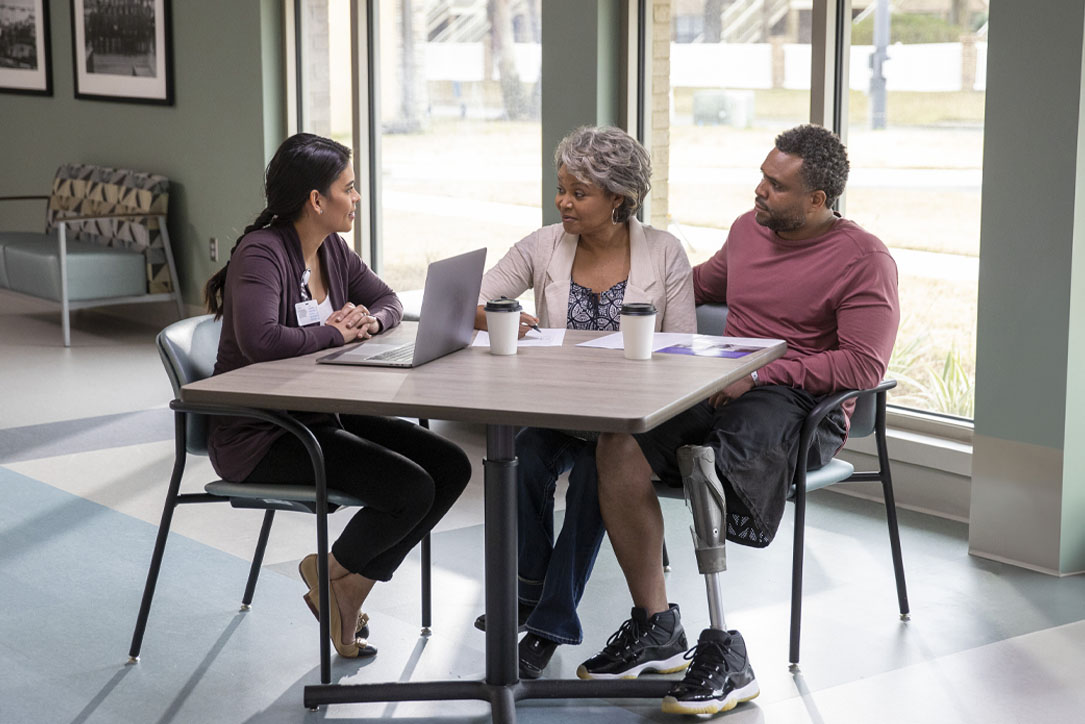
Emotional healing after amputation
Emotional healing is just as important as physical healing. As part of inpatient rehabilitation, patients will learn about peer support groups they can participate in at the hospital and at home after discharge.
It's important to educate families about these support groups, too. "Many times, while in rehabilitation, patients aren't yet ready to talk about limb loss," Holbrook said. However, once at home, patients may become more comfortable discussing emotional needs with family. "If the family has the information on how to reach out for support, they are prepared to do so when their loved one is ready."
For patients looking to participate in support groups virtually, Holbrook recommends programs facilitated by the Amputee Coalition. There is even an app that allows patients with limb loss or limb difference to connect with a certified peer support visitor.
Healing with inpatient rehabilitation after amputation
Adjusting to life after amputation takes time, patience and support, but no one has to navigate the journey alone. With the right rehabilitation team, strong family involvement and connection to peer resources, patients can build confidence and return to the activities that matter most. If you or a loved one is beginning this process, find an Encompass Health hospital to move forward with strength and hope.