Encompass Health STOP program protects patients and staff while supporting our commitment to delivering exceptional care.
According to the American Nurses Association, approximately 65% of health care workers experience pain from work-related musculoskeletal disorders (MSDs), often caused by lifting, repositioning patients, bearing uneven weight, stretching, standing and bending. These injuries can lead to decreased stamina, long-term health issues and nursing burnout.
What are musculoskeletal disorders?
Musculoskeletal disorders affect muscles, nerves, tendons, joints, cartilage and spinal discs. In health care settings, these conditions can vary in severity and may increase the risk of injury to both patients and staff.
Empowering safer practices with the STOP program
To address these risks, Encompass Health developed the STOP program, an initiative designed to empower health care professionals and prevent injuries by promoting safe practices during patient care and transfers. Through this initiative, participants learn how to set themselves and their patients up for success by following four key steps:
- Stop: Pause to observe your surroundings and assess available materials and support.
- Think: Consider what you need and plan ahead to ensure a safe patient transfer.
- Organize: Gather all necessary equipment before beginning any task.
- Position: Align your body properly to minimize the risk of injury during patient handling.
Loren McDaniel, RN, STOP champion and hospital educator at Encompass Health Rehabilitation Hospital of Greenville, said this program teaches nurses, therapists and other health care professionals the value of advocating for their own safety.
“Nurses perform frequent, recurring transfers at the bedside,” McDaniel said. “That is what the STOP program is designed for. It helps identify the safest and most efficient techniques to use at the bedside to conserve your energy and your patient’s energy.”
By integrating these steps into daily routines, health care professionals can create safer environments for themselves and their patients.
“At Encompass Health, we are more hands-on, lifting patients out of bed, helping them to the restroom and assisting individuals with limited mobility," McDaniel said. “It is important to understand proper body positioning for your safety and longevity.”
What is the STOP program?
The STOP program is divided into two stages, each focused on employee safety and training:
- STOP I teaches employees basic injury prevention techniques.
- STOP II focuses on training employees on safe patient transfer protocols.
Encompass Health regional STOP trainers host boot camps throughout the year, while STOP champions provide ongoing support within hospitals.
“It’s really designed for our employees — to protect them, encourage them and give them the ability to perform safe transfers,” McDaniel said. “It’s a snowball effect. It helps patients with mobility issues and ensures safer transfers. It looks different for everyone, but it’s about supporting our nurses and techs so they can conserve their energy during their shifts.”
McDaniel emphasized the value of formalized training.
“I’ve been a nurse for more than 16 years, and I’ve never had training like this,” she said. “Having a structured approach to patient care helps you make better decisions and provide safer care.”
Participation in the STOP program is mandatory for all clinical staff at Encompass Health rehabilitation hospitals. Building relationships with STOP champions is encouraged, especially when facing complex transfers.
“You’re going to encounter situations that require real-time training,” McDaniel said. “That’s when your STOP champion becomes a vital resource. It’s a way to build and maintain trust with your teams.”
Safe transfers: STOP Light Tool
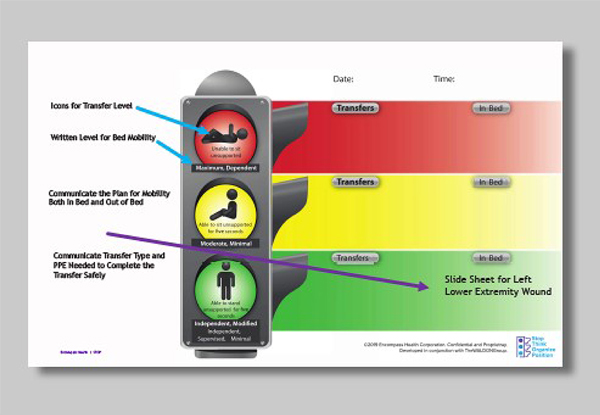
The STOP Light Tool is the clinician’s visual guide that helps them determine the safest way to transfer a patient.
“Every patient room has a STOP Light Tool, and that’s how clinicians know how to transfer a patient,” McDaniel said. “Therapists, nurses and techs use it to communicate and coordinate transfers. Whether a patient has dependent bed mobility or needs to transfer from a specific side, it’s an interdisciplinary approach to ensure safety — from hospital to home.”
The tool also bridges communication between shifts. For example, the night shift team may encounter more challenging transfers due to patient fatigue or medication effects following therapy earlier in the day. By documenting specific transfer needs, the STOP Light Tool ensures that all team members, regardless of shift, are informed and aligned on the safest approach.
By embracing safe patient handling practices, clinicians not only protect themselves from injury but also enhance the quality of care they provide. As health care continues to evolve, programs like the STOP initiative are essential in fostering a culture of safety, compassion and resilience.