
Stroke | Disease management

How long does it take to recover after a stroke?

You or your loved one just had a stroke. Once the initial shock subsides, you want to know: How long does it take to recover from a stroke? Will I make a full recovery? Will I be able to walk? These are questions that everyone wants their physician to answer.

Your doctor or therapist is not being evasive when they say, “It depends.” Early on the exact timeline and amount of recovery can be difficult to predict. After a few weeks we generally have a much better idea of how you will do. However, it is still possible to make some general observations about stroke recovery.

In animal research studies, the first 30 days seem to offer the best opportunity for recovery. However, humans have a longer window of opportunity, with the most rapid recovery taking place in the first 90-120 days. That does not mean that you will not continue to improve after the three to four months, but it will probably be at a slower rate. This is why it is so important to get aggressive rehabilitation early. Start thinking “rehab” immediately after the acute danger of the stroke has passed.

Expect improvement

Just about everyone who has had a stroke will experience more than 50% improvement. Motor movement (hand or leg paralysis) tends to recover faster. The majority of patients will walk again, although they may require an assistive device like a cane or walker. The brain cells that control individual movements are grouped closer together and this allows for faster recovery. It is more encouraging when hand movement starts to return in the first two weeks and the patient has a better chance of regaining functional use of their hand. Functions like speech or attention require larger “distributed” areas of the brain and take longer to recover.

Research studies suggest that the amount (dose) of therapy makes a difference. When your doctor orders a medicine for you there is a specific dose of the medicine. If you have a strep throat you may take Amoxicillin 500mg twice a day for 10 days. Improvement after a stroke requires a minimum dose of “deliberate practice” to achieve the best outcome. The patient needs to perform multiple repetitions of a functional task in a highly motivated environment. Rehab! The repeated performance of these tasks promotes repair of the brain.

How inpatient rehabilitation can help

An inpatient rehabilitation hospital provides at least three hours of therapy per day while other settings such as a skilled nursing facility do not. Just like your blood pressure medicine, be sure you are getting the right dose of rehabilitation. It matters.

Finally, if you have reached a plateau in your recovery, there may still be an opportunity for additional improvement. We believe that many patients still have a “reservoir" of abilities and can still make some additional recovery with high intensity therapy that is focused on the remaining problems. It always pays to get a re-evaluation by a rehabilitation expert.

So, if you're asking "how long does it take to recover after a stroke," yes, it does depend, but understand the settings of care and the benefits of therapy offered at a rehabilitation hospital.
What is dysphagia? 

Like aphasia, it can be caused by neurological conditions such as brain injuries and stroke, but it also can stem from muscle disorders, certain cancers and blockages/strictures in the throat. 

Depending on the cause, dysphagia can be temporary or long-term. 

Conditions commonly associated with dysphagia include: 

  • Parkinson’s disease and multiple sclerosis
  • Neck and throat cancers
  • Late-stage Alzheimer’s disease and other dementias
  • Cervical neck surgeries 

Stages of dysphagia 

There are three phases of swallowing that are impacted with dysphagia: 

  • Oral: This is the process of chewing food and mixing it with saliva to form a bolus in order for it to be moved from the front of the mouth to the back of the mouth. A person with dysphagia in this phase could have trouble breaking down the food enough to properly move it to the back of the mouth to trigger the swallowing reflex. This stage is also where tongue weakness or decreased sensation may impact the ability to clear food from the sides of the mouth causing it to pocket in the cheeks.
  • Pharyngeal: This is where the swallowing reflex begins, and pharyngeal muscles push food down the throat to the esophagus. The epiglottis (a cartilage) inverts to protect the airway and sends the bolus towards the esophagus. This is when the upper esophageal sphincter opens to allow food to travel into the esophagus. A person with dysphagia in this phase might feel like the food is “entering the wrong pipe,” Delashaw said, because the muscles in the pharynx and/or larynx are not operating properly to prevent food or liquids from entering the airway.
  • Esophageal: This is when the bolus is taken from the upper esophageal sphincter that has opened, allowing it to enter the esophagus. Peristalsis (muscle contractions) carries the bolus from the upper esophagus towards the stomach. In this phase, a person with dysphagia may feel like food is stuck in their throat or chest. 

Symptoms of dysphagia 

Dysphagia symptoms could include: 

  • Coughing or choking during or shortly after eating or drinking
  • Heartburn or indigestion
  • Feeling that food is stuck in the throat or chest
  • Painful swallowing
  • Regurgitation
  • Food sitting in the mouth or being pocketed in the cheeks
  • Unexplained weight loss
  • Reduced desire to eat 

Diagnosing dysphagia 

Dysphagia is diagnosed by a healthcare provider. Speech-language pathologists diagnose dysphagia with a comprehensive oral exam and swallowing examination, which should include swallowing tests such as a FEES or MBS exam. 

  • FEES: FEES stands for fiberoptic endoscopic evaluation of swallowing. This is an exam where a speech-language pathologist inserts a small thin scope with a camera through the nose and allows visualization of the throat, larynx and vocal cords to assess swallow function as you eat and drink certain foods.
  • MBS: During a modified barium swallow study, a speech-language pathologist will give you food and liquids covered in a small amount of barium. As you swallow, X-rays are performed to view your swallow in real-time. 

Treatment of dysphagia 

After a dysphagia diagnosis, a speech-language pathologist can help determine what consistency of food and liquids is safest to eliminate risk of choking or aspiration. They can also provide therapy and exercises to help strengthen the muscles used during the different stages of swallowing.  

Treatment should always involve a discussion with the individual to determine their wishes regarding oral intake and development of dysphagia treatment.  

“If difficulty is noted in the oral phase, we can design an exercise program to target movement for the muscles used when breaking down the food,” Delashaw said. “Say you had a stroke that impacted lip muscles, and you can’t hold food in your mouth. We’re going to work on increasing the control and strength of the lip muscles, so you do not lose liquids or foods out of the mouth.” 

In addition to exercises, Delashaw said neuromuscular electrical stimulation could also be used to increase muscle awareness in the different stages of dysphagia. 

In the esophageal stage, your speech-language pathologist could suggest obtaining a referral from your primary care doctor to a gastroenterologist for further evaluation. 

Recovery from dysphagia 

Depending on the diagnosis and related conditions, dysphagia could improve over time. If swallowing difficulty is related to a neurological condition, inpatient rehabilitation could help develop adaptive techniques and diet plans to meet your needs and quality of life standards.

The multidisciplinary approach in this setting also allows for other symptoms related to your condition to be addressed through intensive therapy. In addition to working with a speech-language pathologist, your therapy team would also include a physical therapist and occupational therapist to address mobility and strength as well as activities of daily living and quality of life.

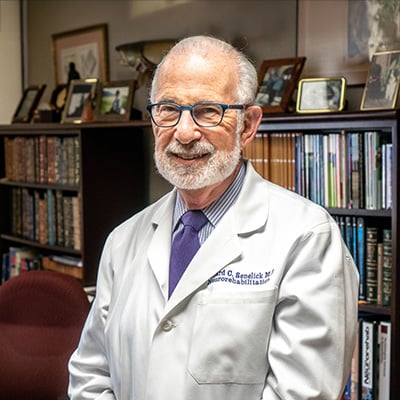
Dr. Richard Senelick headshot

Richard C. Senelick, M.D.