Services at Yuma Rehabilitation Hospital
Our inpatient rehabilitation services include personalized care and advanced therapies with at least three hours of physical, occupational or speech therapy five days a week to help you regain independence and reach your recovery goals.
Amenities at our hospital
Televisions
Telephones
Cafeteria
Free WiFi
Parking
Nonsmoking
Courtyard
Pet friendly
Service animals allowed
Interpreter services
Spanish translators available
Student observation hours
Onsite dialysis
Family lounge
Day room
Tours available
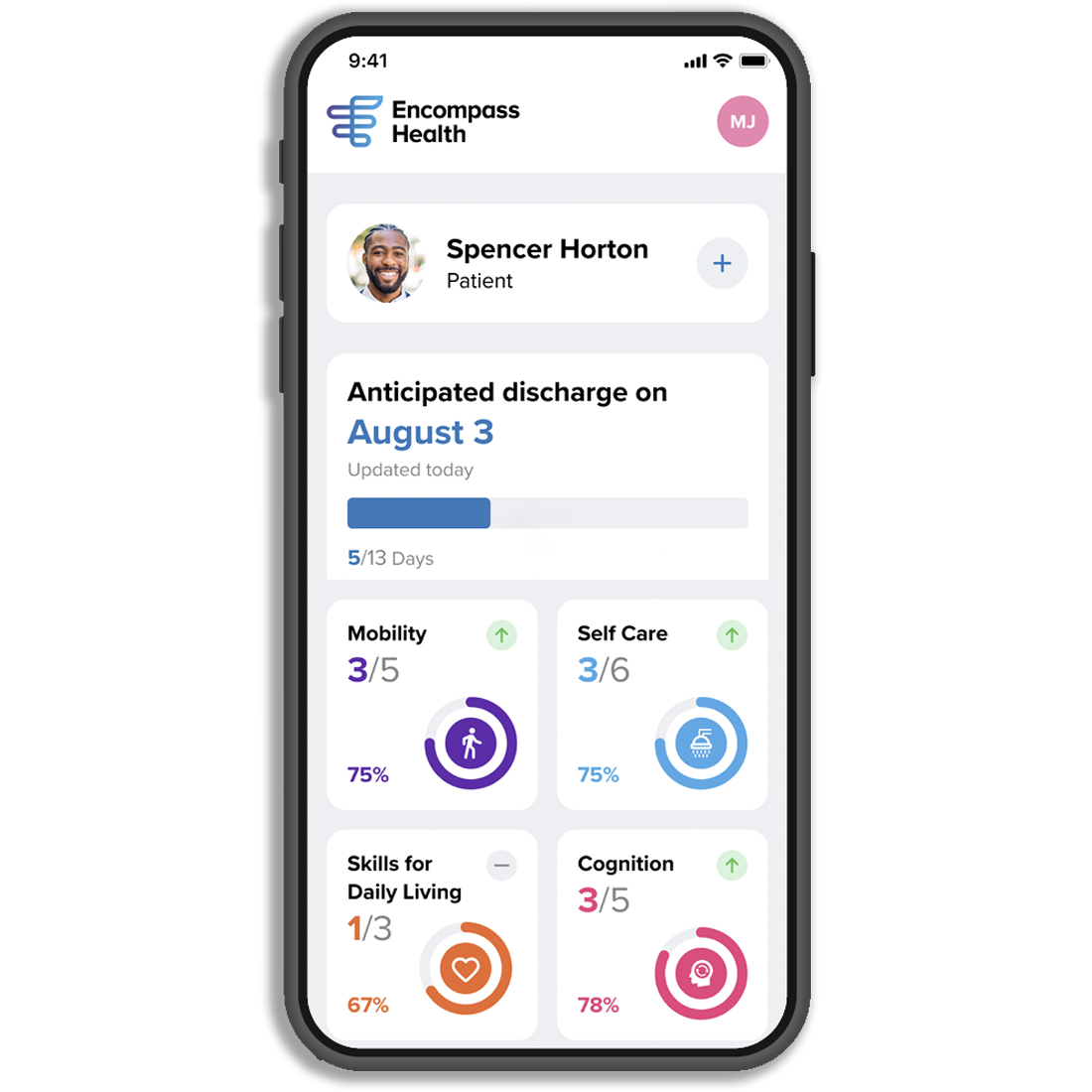
Get our caregiver app
The MyEHC Caregiver App will allow you to track your loved one’s progress while they are in our care.
You can also access the portal from your desktop.
Support groups
Date: First Saturday of each month
Time: 9:30 a.m. - 11:15 a.m.
Location: Yuma Rehabilitation Hospital, Quechan Room
Contact: Mary Schaal, (928) 344-0587 or mjschaal@yahoo.com
Group empowerment for multiple sclerosis (GEMS)
Date: First Saturday of each month
Time: 9:30 a.m. - 11:15 a.m.
Location: Yuma Rehabilitation Hospital, Quechan Room
Contact: Mary Schaal, (928) 344-0587 or mjschaal@yahoo.com
Amputee support group
Date: Third Thursday of the month
Time: 5:30 p.m.
Location: Yuma Rehabilitation Hospital
Contact: Jean Hobkirk, (928) 341-1965 or jhobkirk@hanger.com
Stroke survivor support group
Date: Third Wednesday of the month
Time: 5:00 - 6:00 p.m.
Location: Yuma Rehabilitation Hospital, therapy gym
Contact: Greg and Marilyn Gardner, (928) 726-5000
Parkinson's support group
Location: Daybreakers Cafe, 1800 N Frontage Rd, Yuma, AZ
Contact: Greg and Marilyn Gardner, (928) 210-4679
Focus on Ability Support Group
Date: First Tuesday of the month
Time: 5:30 p.m. - 6:30 p.m.
Location: Yuma Rehabilitation Hospital
Contact: Rodney Thomas,(928) 246-2865 or focusonabilityaz@gmail.com