After a massive stroke left him unable to move the left side of his body, David Beaman turned to stroke rehabilitation to help him return home, reconnect with his family and get back to work with NASA.

David's success story
For more than a decade, David Beaman was counting down the days to the launch of Artemis II. It would be the first time humans traveled to the vicinity of the moon since 1972.
As program manager of NASA’s Space Launch System, David was responsible for making sure the shuttle was safe to launch on April 1. However, weeks before liftoff, he got a call; his wife had fallen and was in the hospital.
“He rushed home to take care of me,” recalled Michelle Beaman. “When he got to the hospital, he was so tired. I sent him home to rest.”
She expected her husband to return in the morning, and he did, only instead of as a visitor, he was admitted as a patient. David had a massive stroke that would take him on a different kind of mission as he worked to get back to his life and his work with NASA.
Determining next steps after a massive stroke
David was alone in his Huntsville, Alabama, home when he noticed a tingling in his leg. He assumed it was a pinched nerve and went to lie down. When he tried to get up, he collapsed and could no longer move the left side of his body.
He was able to call 911 and was certain that he’d had a stroke; he just didn’t realize how serious it was.
“I was just lying on the bedroom floor and couldn’t move my left side at all,” David said. “I had no mobility on my left side. I don’t know how to explain it to people when your mind is telling your body to do something, and it’s not working.”
With both David and Michelle at the hospital, the couple had to determine what to do next. Michelle wanted to be stronger and able to walk, so she could care for her husband, and David just wanted to return to the simple things in life. “I wanted to walk in my garden again. I wanted to play with my grandkids,” he said.
While Michelle needed care to build her strength, David needed both physical and neurological rehabilitation to help him recover. He wanted care that would give him the best chance of getting back to his life and his work with NASA’s Space Launch System.
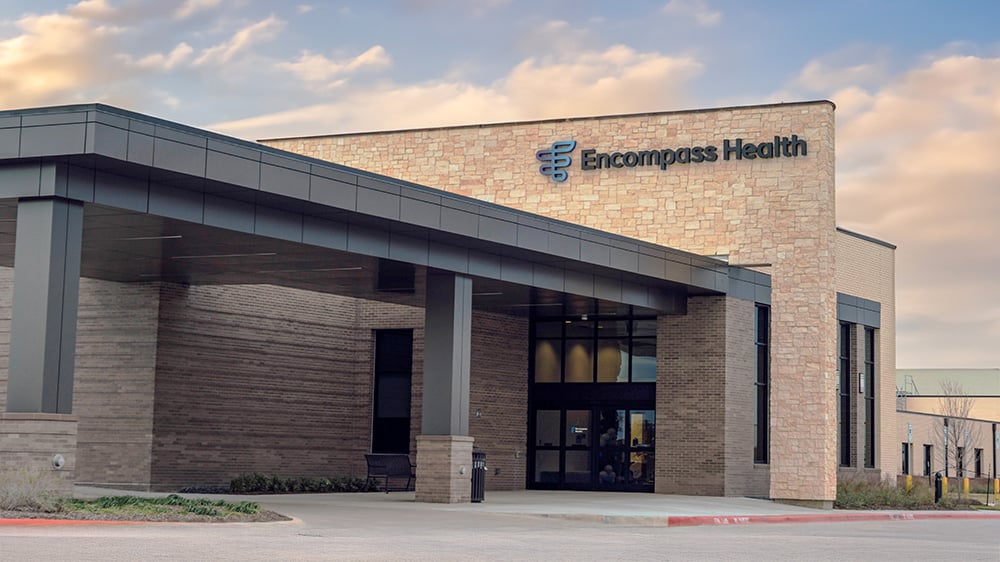
“I told my doctors I wanted to go to the best facility,” David said. “They said I really needed to go to Encompass Health because they’re really good for stroke patients.” David and his wife both admitted to Encompass Health Rehabilitation Hospital of North Alabama, but their rehabilitation would look as different as their diagnoses.
A customized care plan focused on individual needs and goals
While Michelle’s therapy would focus on helping her walk again after her fall, David’s would be much more complex. He required a combination of physical, occupational and speech therapies.
Determined to get better, David took to his stroke rehabilitation just as he would a shuttle launch, putting his trust in the experts around him.
“They take a systemic approach to recovery,” he said of his Encompass Health team. “Planning and executing that plan to send folks to space is the same as planning a rehab for an individual that’s had a stroke or another physical injury. They just lay it out, and they execute it in a flawless manner.”
David said therapy was challenging but added that it’s what he needed to regain his strength and mobility, as well as speech and cognition.
Preparing for the Artemis II launch
David was at Encompass Health North Alabama for about three weeks. During that time, the long-awaited Artemis II launch occurred, and David was able to be a part of it. NASA connected David to the command center in his hospital room where he was able to talk with his team prior to countdown.
“I spent 11 years trying to get ready for this launch and send humans to the moon, so NASA agreed to tie in the command center here,” he said. “I was able to speak to my team, the team that was supporting the Artemis launch, to give them a little pep talk, and we were able to follow the launch count down and launch from the facility. That was amazing for the facility to allow us and be willing to let us do that.”
Continuing his stroke recovery at home
After about three weeks at Encompass Health North Alabama, David discharged and was able to return to his home. Though he would still need continued therapy after leaving the rehabilitation hospital, he said he felt safe going home thanks to his work in therapy.
“One thing they do is prepare you for when you go home, the things you don’t think about,” he said. “How do you tie your shoe with one hand? How do you brush your teeth? They give you little tricks, and to me, those things have helped so much.”
David is now back to working two days a week at NASA, and after accomplishing his goal of returning home to his family and friends, he has a new mission, one that his father accomplished in 1969 when he worked on the launch of Apollo 11.
“My dad came here to work for NASA. I got to see the Apollo 11 launch,” David recalled. “I saw the space program grow. I’ve worked on 78 shuttle missions and helped start the Space Launch Program. My goal is to see the next landing on the moon, and then just ride off into the sunset.”
Health resources
Get more healthcare resources and healthy aging tips from our rehabilitation experts.
Related Articles
Find an Encompass Health location near you